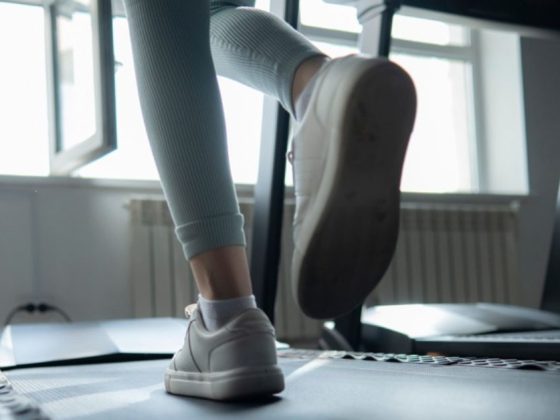
Brisk walking sounds simple until you actually try doing it in real-life conditions. Not a treadmill. Not a perfect park loop. I’m talking about uneven sidewalks, random stops, heat, and that awkward moment when you’re trying to “walk faster” but your body refuses to cooperate.
I tested brisk walking daily for two weeks in short 15–30 minute sessions. What I expected was a smooth ramp into a healthier routine. What I got instead was a mix of pacing issues, sore shins from overcorrecting my stride, and a lot of trial-and-error around rhythm.
What “Brisk” Actually Felt Like (and Why the Numbers Didn’t Hold Up)
Most guides treat brisk walking like a clean formula. Hit a pace. Stay in a heart rate zone. Maintain cadence.
That didn’t survive contact with real walking conditions.
I started out trying to match those numbers. It lasted maybe a couple of sessions before it stopped making sense in practice.

What I actually used instead (how it showed up in real walks)
It wasn’t a chart. It was a set of physical cues I noticed mid-walk:
- I could still talk, but I had to pause every few words
- Breathing stayed controlled, but noticeably heavier after 5–10 minutes
- My pace stopped feeling “casual” and started feeling slightly intentional, like I was pushing through air resistance
There was no clean moment where it “became brisk.” It shifted gradually depending on terrain and fatigue.

The mismatch between theory and real movement
On paper, this usually gets labeled as moderate intensity — roughly 50%–70% of max heart rate.
But that label didn’t hold consistently.
Some days:
- a slow pace still felt moderately intense because of heat
- a faster pace barely registered because I was fresh
Other days:
- the same route felt harder just because I was tired from sitting all day
So the issue wasn’t understanding the definition. It was that the definition assumes stable conditions. Real walking never is.
The biggest thing I didn’t expect: pace is unstable even when you think it’s fixed
I tested this by repeating the same route at what I thought was the “same speed.”
It wasn’t consistent at all.
- 3 mph felt like a warm-up one day
- 3 mph felt like a push the next
- 4 mph sometimes felt easier than both when rhythm was smooth
That’s where the “fixed pace” idea starts breaking down.
The variable wasn’t effort alone. It was environment, fatigue, and rhythm all stacking each time differently.
Bottom line from actually doing it
Brisk walking isn’t a stable speed you lock in.
It’s a moving target shaped by:
- heat
- fatigue
- terrain
- how settled your rhythm is that day
The numbers still matter for benchmarks, but they’re unreliable as real-time guidance once you’re outside a controlled setting.
The First Real Problem: It Feels Awkward Before It Feels Natural
The first few days didn’t feel like fitness. It felt like overthinking movement.
What I noticed early on:
- My arms were either too stiff or swinging too aggressively
- My stride kept switching between too short and slightly forced
- I kept checking my pace like I was doing it wrong
Honestly, that adjustment phase is where most people quit. It doesn’t feel intuitive at first. It feels mechanical.
And if you try to force “correct form” too early, everything tightens up instead of improving.
Speed Isn’t the Real Issue — Rhythm Is
Most articles obsess over speed ranges like 3 mph or 4 mph.
I found that misleading.
What actually mattered was rhythm stability.
Here’s how it played out:
| Condition | Result |
|---|---|
| Consistent cadence | Pace increased naturally |
| Overthinking stride length | Knees and shins started feeling tight |
| Trying to “go faster” directly | Form broke down quickly |
There were days where I walked slower but got a better cardio effect simply because my rhythm was steady.
That’s something most guides completely miss.

The Talk Test Was More Useful Than My Fitness Tracker
I used a basic wearable during the test period. It helped track steps, but it also created a weird habit of checking stats mid-walk.
The talk test ended up being more reliable:
- Full sentences → too easy
- Short phrases → moderate intensity
- Single words → pushing too hard
What I didn’t like about trackers:
- They lag on real terrain changes
- They make you obsess over numbers instead of movement
- They can mislead you into speeding up unnecessarily
What I did like:
- Step trends over time were useful
- It helped spot consistency gaps
What Actually Changed After Two Weeks (and What Didn’t)
Two weeks didn’t “transform” anything. That’s the first honest point. The changes were mechanical, not dramatic.
What actually shifted was how much effort I wasted inside the walk itself.
1. My pacing stopped feeling erratic — but only after I stopped overcorrecting
Early on, I kept trying to “fix” my speed mid-walk. That backfired.
- If I felt slow, I overextended my stride
- If I felt fast, I shortened steps too much
- Either way, rhythm kept breaking every few minutes
Around day 6–8, I stopped adjusting constantly and just locked into cadence.
That’s when pacing stabilized. Not because I got fitter overnight, but because I stopped interfering with the movement.
2. Shin tightness wasn’t “fitness adaptation” — it was a form mistake
The discomfort didn’t feel like normal post-exercise soreness.
It showed up specifically after sessions where I tried to force longer strides.
- Tightness was front-of-shin, not muscle fatigue overall
- It appeared within 24–48 hours after those walks
- It disappeared once I shortened stride and focused on push-off instead
So the “improvement” wasn’t recovery speed. It was me removing the mistake that caused the strain in the first place.
That’s an important distinction most guides skip.
3. The mental effect only showed up on “no-thinking” walks
The mental reset wasn’t consistent every time.
It only worked when I stopped tracking everything.
- No checking step count
- No pacing adjustments mid-walk
- No trying to “optimize” intensity
On those walks, usually mid-afternoon or early evening, the effect was simple: less mental noise afterward.
On days I monitored stats too much, that benefit basically disappeared.
So it wasn’t the walking itself. It was the absence of interference.
The Friction Points That Don’t Show Up in Most Guides
Most brisk walking advice skips the parts that actually make people quit or slow down.
These were the real ones during testing.
1. Overcorrection fatigue hits before physical fatigue
The surprising part wasn’t muscle soreness. It was decision fatigue.
Every walk started with small adjustments:
- “Am I going too slow?”
- “Should I swing arms more?”
- “Is this brisk enough?”
That mental noise fades only after repetition, not instruction.
2. Boredom isn’t about time — it’s about repetition without variation
Even 20-minute walks started feeling repetitive when:
- I used the same route
- The pace stayed constant
- There were no natural interruptions
Same duration, different experience when I changed route or terrain.
Flat sidewalks = faster boredom curve
Mixed terrain = slower boredom curve
That pattern showed up clearly across the two weeks.
3. Wearables didn’t just “track” the walk — they altered it
This one was more disruptive than expected.
- Checking step count broke cadence mid-stride
- Heart rate spikes made me adjust pace unnecessarily
- Notifications pulled attention away from rhythm
At one point, I started walking for the numbers, not the movement.
When I stopped looking at the device mid-walk, cadence improved immediately.
What Actually Helped Me Walk Faster (Without Forcing It)
I stopped thinking in terms of “speed training” and focused on removing friction from movement.
Posture shift (biggest impact)
- Standing taller without locking the body
- Eyes forward instead of down
- Slight core engagement without tension
This alone cleaned up my pace more than any “speed technique.”
Arm movement (underrated change)
- Bent at roughly 90 degrees
- Swinging forward and back, not across the body
- Relaxed shoulders instead of controlled tension
When I fixed this, pace increased without extra effort.
Foot strike (where mistakes show up fast)
- Heel-to-toe roll instead of flat stepping
- Avoiding heavy ground impact
- Softer contact reduced fatigue over time
If I started stomping or rushing steps, everything degraded quickly.
Stride length (the counterintuitive part)
Shorter worked better.
Not shorter in a cramped way. Just more controlled.
Overstriding made me feel faster but actually slowed rhythm and added joint stress.
What I Would Ignore If I Started Again
If I had to restart this from scratch, I would skip:
- Exact heart rate tracking early on
- Step-per-minute targets in the first week
- Trying to “fix form” aggressively from day one
Instead, I would focus on:
- consistency
- rhythm
- comfort under slight exertion
Everything else settles after that.
Conclusion
Brisk walking looks simple on paper, but the reality is messier. The first few sessions feel mechanical, and most of the “standard advice” only starts making sense once your body adapts to the rhythm.
What actually changed things for me wasn’t hitting a specific speed or target. It was removing unnecessary tension from movement and letting pace build naturally over time. Once that happened, brisk walking stopped feeling like a task and started feeling like something I could sustain without thinking too much about it.
The biggest misconception is that brisk walking is about intensity control. It’s not. It’s about consistency without breaking form.
If you try this, don’t chase speed first. Fix rhythm and arm movement, and let everything else catch up on its own.