Running indoors feels controlled. Predictable. No potholes, no uneven pavement, no weather drama. But your body still absorbs force with every step, and your shoes decide how well that force gets handled.
This guide breaks down what actually matters in treadmill footwear today, plus updated shoe picks that are still available and worth considering in 2026.
Why Your Treadmill Shoes Matter More Than You Think
A treadmill reduces impact compared to concrete. That’s true. But it doesn’t remove it.
Each stride still sends force up your legs. Multiply that by a few thousand steps per session, and you’re looking at repetitive stress. That’s where proper footwear steps in.
A good treadmill shoe helps with:
- Shock absorption (even on a cushioned deck)
- Foot alignment and stability
- Reducing joint strain over time
- Preventing blisters and hotspots
- Maintaining consistent performance
Without that, you might still finish your workout. You’ll just feel it later.
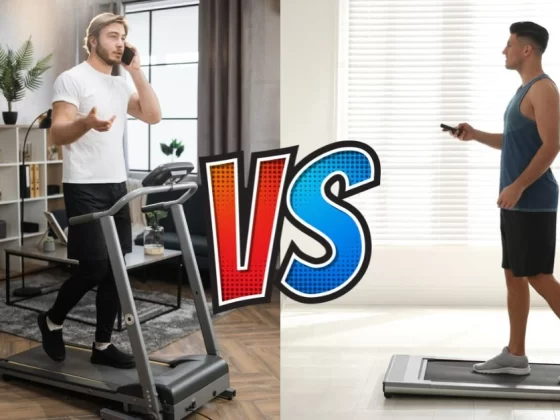
Walking vs Running on a Treadmill
Yes, You Might Need Different Shoes
A lot of people mix walking and running in one session. Totally fine. But your shoe needs change depending on what you do most.
If You Mostly Walk:
- Look for flexibility in the forefoot
- Prioritize comfort over heavy cushioning
- Breathability matters more than structure
If You Mostly Run:
- You need responsive cushioning
- Heel support becomes more important
- Stability matters if you increase speed or incline
If you’re switching between both, stick with a running shoe. It handles both jobs better than a walking shoe trying to keep up.
The Arch Problem Nobody Talks About Enough
Honestly, this is where most people get it wrong.
You don’t need the “best shoe.” You need the right shoe for your foot shape.
1. Flat Feet (Low Arch)
Your foot rolls inward more than it should.
What helps:
- Stability or motion-control shoes
- Firm midsoles
- Structured arch support
2. Neutral Arch
You’re in the easiest category.
What works:
- Most neutral running shoes
- Balanced cushioning
- Moderate support
3. High Arch
Less natural shock absorption. More pressure on heel and forefoot.
What you want:
- Extra cushioning
- Flexible soles
- Softer midsoles
Quick check: Step on a wet surface and look at your footprint. It tells you more than most store advice.
Fit Issues That Will Ruin Your Workout Fast
Bad fit doesn’t feel terrible at first. That’s the trap.
Ten minutes in, you notice rubbing. Twenty minutes in, your stride changes. Next day, blisters or soreness.
What a proper fit actually feels like:
- Heel locked in place (no slipping)
- Toe box has space (not cramped)
- Midfoot feels secure, not squeezed
- No pressure points when walking or jogging
Try them at home first. Walk around. Do a few short jogs. Don’t wait until your workout to “test” them.

Cushioning: More Isn’t Always Better
This one gets confusing.
Treadmills already absorb impact. So you don’t always need max cushioning.
But…
If you’re:
- Running long distances
- Heavier in body weight
- Recovering from joint stress
Then extra cushioning helps.
If you’re:
- Doing intervals
- Running short sessions
- Prefer a natural feel
You might prefer something lighter and less padded.
Breathability Matters (Even Indoors)
People underestimate how sweaty treadmill sessions get.
A poorly ventilated shoe turns into a heat trap. That leads to odor, discomfort, and sometimes fungal issues.
Look for:
- Engineered mesh uppers
- Lightweight materials
- Moisture-wicking linings
It’s a small detail until it’s not.
Your Running Style Changes Everything
You don’t run the same way as the person next to you. That’s normal.
Heel Strike (Most Common)
- Heel hits first
- Needs heel cushioning
- Durable rear outsole helps
Forefoot Strike
- Ball of foot lands first
- Needs forefoot cushioning
- More flexible sole preferred
Mixed or Midfoot
- Balanced support works best
Quick test: Run naturally and pay attention to where you land. That’s your baseline.
Best Treadmill Running Shoes Picks for 2026
What They Actually Feel Like When You Run
These aren’t just “good shoes.” Each one solves a slightly different problem on the treadmill. That’s what matters.
1. Brooks Ghost 15
This is the pair people end up sticking with after trying three others.
It doesn’t do anything flashy, and that’s exactly why it works. The cushioning is soft enough to take the edge off repetitive treadmill impact, but it never feels like you’re sinking or fighting the shoe. That matters more indoors, where your stride stays consistent and flaws show up faster.
If you’ve ever had a run where nothing felt off—no weird pressure, no knee irritation, no hot spots—that’s the kind of experience this shoe is built for.
Best for: Daily treadmill runs where you just want things to feel right, not complicated
2. ASICS Gel-Nimbus 26
Some days your legs feel heavy before you even start. This is the shoe for those days.
The cushioning here is noticeably softer, especially under the heel. On a treadmill, that translates into less cumulative fatigue over time. It’s the difference between stepping off after 45 minutes feeling fine… or feeling like your joints took a beating.
It’s not built for speed. But if your goal is staying consistent without wearing your body down, it quietly does the job.
Best for: Longer sessions when comfort matters more than pace
3. HOKA Clifton 9
This one feels different within the first minute.
There’s a slight forward roll to each step, almost like the shoe is nudging you along. On a treadmill, where movement can feel repetitive or even dull, that subtle assist makes a difference. You don’t have to think about your stride as much—it just flows.
Despite the cushioning, it stays light. So you’re not dragging weight as your run goes on.
Best for: Runners who want an easier, smoother stride without extra bulk
4. Nike Air Zoom Pegasus 40
If your workouts aren’t predictable, this is the safe bet.
Warm-up jog, short intervals, incline walking, then back to running—it handles all of it without feeling out of place. The cushioning has a bit of snap to it, so it doesn’t feel dull when you pick up speed.
Some shoes feel great at one pace and awkward at another. This one stays consistent, which is exactly what you want if your treadmill sessions change day to day.
Best for: Mixed workouts where you don’t want to switch shoes
5. New Balance Fresh Foam X 1080v13
This is the one people describe as “I forgot I was wearing them.”
The upper stretches and adapts, so you don’t get that stiff, boxed-in feeling. On longer treadmill sessions, that becomes a big deal. Less friction, less adjustment mid-run, fewer distractions.
The cushioning leans soft, but it’s stable enough that you don’t feel wobbly, even when you’re tired.
Best for: Comfort-first runners who hate stiff or restrictive shoes
6. Saucony Ride 17
Not everyone wants soft and pillowy. Some people want control.
This shoe has a slightly firmer feel, which actually helps on treadmills. Since the surface already has some give, a firmer shoe gives you a more grounded, stable push-off. You feel your stride more clearly.
It’s the kind of shoe that makes your run feel efficient instead of cushioned for the sake of it.
Best for: Runners who prefer a more responsive, controlled ride
7. Adidas Ultraboost Light
This one sits in that middle space between performance and lifestyle—but it’s not just for looks.
The cushioning is soft and springy, which feels good for casual treadmill runs or light sessions. It’s not the most technical option here, but it’s comfortable enough that you’ll actually want to use it regularly, and that consistency matters more than specs.
Also, let’s be honest, if a shoe looks good, you’re more likely to put it on.
Best for: Casual runners who want comfort with everyday wear appeal
Quick Reality Check
If you’re stuck choosing, don’t overthink brand or hype.
- Want safe and reliable → Ghost 15
- Want max comfort → Nimbus 26 or 1080v13
- Want smoother stride → Clifton 9
- Want versatility → Pegasus 40
- Want control → Ride 17
That’s really what it comes down to.
Pick based on how you want your run to feel, not just what sounds good on paper.
Best Treadmill Walking Shoes (Updated Picks)
What They’re Actually Good At (and Who They’re For)
1. Skechers GOwalk Arch Fit
This is the pair you reach for when your feet are already a bit tired before the workout even starts.
The built-in arch support is noticeable right away. Not aggressive, just enough to keep your foot from collapsing inward over time. On a treadmill, where you’re repeating the same motion for 30–60 minutes, that support quietly prevents that slow, annoying fatigue in your arches.
And yeah, the slip-on design sounds like a small thing, but it makes these ridiculously easy to use. No friction, no break-in drama. Just step in and go.
Best for: Easy walks, daily steps, or anyone who wants comfort without thinking too much
2. New Balance 847v4
This one feels more structured the second you put it on.
If your feet tend to roll inward or you’ve dealt with knee or ankle discomfort, this is where it starts to make sense. The stability here isn’t subtle. It keeps your foot aligned, especially during longer treadmill walks or incline sessions where form tends to break down.
It’s not the lightest or softest option. But it gives you that “held in place” feeling that a lot of walking shoes lack.
Best for: Stability, joint support, and longer or incline-heavy walks
3. ASICS Gel-Contend 9
This is the “no drama” option.
You’re not getting premium cushioning or advanced features, but you’re also not dealing with anything awkward or uncomfortable. It just works. The cushioning is decent enough for moderate treadmill sessions, and the upper keeps things breathable so your feet don’t feel trapped halfway through.
If you’re walking a few times a week and don’t want to overthink your shoe choice, this is the kind of pair that quietly gets the job done.
Best for: Casual treadmill walking without spending too much
4. Reebok Walk Ultra 7 DMX Max
This one leans into softness in a very straightforward way.
The air cushioning underfoot gives each step a slightly cushioned, almost pillowy feel. On a treadmill, especially during longer walks, that helps take the edge off repetitive heel strikes. You notice it more the longer you go.
It’s not built for speed or anything technical. But if your goal is to stay comfortable for 45 minutes to an hour without your feet feeling beat up, it holds up well.
Best for: Longer, steady-paced walks where comfort is the priority
Quick Reality Check
Walking shoes aren’t about performance metrics. They’re about how your feet feel after 5,000–10,000 steps on a moving surface.
- Want easy comfort → GOwalk Arch Fit
- Need stability → 847v4
- Want something simple → Gel-Contend 9
- Prefer softer cushioning → Walk Ultra 7
That’s really the decision.
Practical Treadmill Shoe Tips Most People Skip
The Small Fixes That Actually Change How Your Runs Feel
1. Rotate Your Shoes
Not because it sounds advanced. Because your shoes literally need time to bounce back.
Most midsoles (the foam part) compress during a run. On a treadmill, where your stride is repetitive, that compression happens in the same spots over and over. If you wear the same pair daily, the foam never fully recovers.
What that feels like:
- Day 1: soft and responsive
- Day 10: slightly dull
- Day 20: flat, but you don’t notice until your legs feel heavier
Rotating between two pairs fixes this without you thinking about it.
Practical setup:
- Pair A → easy runs / walking
- Pair B → longer runs or harder sessions
You’ll get more life out of both, and your legs will feel the difference.
2. Replace Them Sooner Than You Think
Most people wait until the outsole looks worn. That’s too late.
On a treadmill, the damage is more subtle. The cushioning breaks down internally first, even if the shoe still looks fine outside.
What to actually watch for:
- Runs feel “flat” or dull
- Knees or shins feel sore for no clear reason
- You start adjusting your stride mid-run
Mileage is a guideline, not a rule:
- Around 500–800 km is typical
- Heavier runners or daily users → closer to the lower end
If you’re guessing, you’re probably already overdue.
3. Your Socks Are Doing More Work Than You Think
This one gets ignored way too often.
Cheap cotton socks hold moisture. On a treadmill, that turns into friction. Friction turns into heat. Then blisters.
You don’t notice it right away. It builds.
What actually helps:
- Moisture-wicking materials (poly blends or merino)
- Seamless or flat-seam construction
- Snug fit so they don’t bunch up
A good sock won’t feel “special.” It just removes problems before they start.
4. Fix Your Lacing Before Blaming the Shoe
Heel slipping, tight toes, weird pressure points—half the time, it’s not the shoe.
It’s how you’re lacing it.
Most people lace straight across and leave it there. But small tweaks can completely change the fit.
One adjustment that works immediately:
- Use a runner’s loop (extra eyelet at the top)
- Locks your heel in place
- Reduces sliding without over-tightening the whole shoe
If your toes feel cramped, loosen the lower laces slightly.
If your foot moves too much, tighten midfoot, not the toe box.
It’s a 30-second fix that saves you from buying the wrong pair.
5. Match Your Shoes to What You Actually Do
This is where people get it wrong in a very quiet way.
They buy one pair… then use it for everything.
But treadmill workouts aren’t all the same:
- Slow incline walking
- Steady runs
- Intervals or speed work
Each one stresses your feet differently.
What works better:
- Softer, cushioned shoes → long or steady sessions
- More responsive shoes → intervals or faster runs
- Stable shoes → incline walking or longer durations
You don’t need five pairs. But if your workouts vary a lot, one “do everything” shoe will always feel slightly off.
Final Thoughts
Treadmill workouts look simple on the surface. But the details matter. Shoes are one of those details that quietly shape your entire experience. The right pair won’t magically make you faster. But they will make your runs feel smoother, more stable, and a lot less punishing on your body.
And once you feel that difference, it’s hard to go back.
What It Really Comes Down To
You don’t need the most expensive shoe. You need one that fits your foot, matches your stride, and supports how you actually train.
If something feels off, it probably is. Trust that.
Quick Takeaway
If you’re unsure where to start, go with a neutral, well-cushioned running shoe like the Brooks Ghost or Nike Pegasus. Then adjust based on how your body feels after a few sessions. Your feet will tell you the truth faster than any review.