That moment when you realize you’ve spent way too many hours hunched at a desk, barely moving — and your body is starting to protest. You’ve got a home office, but your steps for the day barely crack 1,000. Whatever happened to walking being part of everyday life?
Here’s the messy truth: sitting all day isn’t just uncomfortable, it’s linked to health issues like higher cholesterol and increased risk for cardiovascular disease. Fitness tech like walking pads or treadmills can help solve that problem. Both get you moving indoors. But in a sea of models, features, sizes, and claims, it’s hard to know what actually fits your home office life and goals. This article peels back the haze — from the real benefits and drawbacks to relatable, practical guidance on choosing between walking pads or treadmills for your space, goals, and lifestyle.
What Are Walking Pads and Treadmills — Really?
Before we start comparing, let’s make sure we’re talking about the same things.
Walking Pads — The Light, Slim Option
A walking pad is basically a stripped‑down treadmill you can slide under a desk or tuck into a corner. It’s compact and lightweight, usually without handrails and without fancy consoles. The idea is simple: you walk — often slowly — while working, reading, or watching TV. Fitness pros call them “portable treadmills” that are ideal for gentle movement rather than intense workouts.
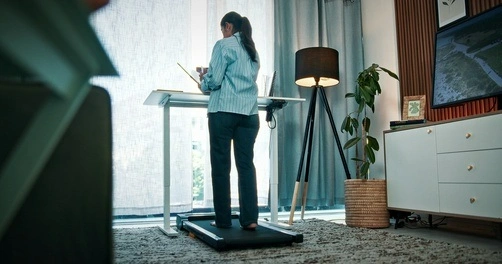
These devices are usually designed for speeds up to around 5 mph — perfect for walking or light strolling but not built for running. Most lack inclines and many don’t include safety features like rails.
Treadmills — Big, Powerful, and Workout‑Ready
A treadmill is the traditional fitness machine you’ve probably seen in gyms. It’s built for walking, jogging, running, and structured workouts. Treadmills typically have:
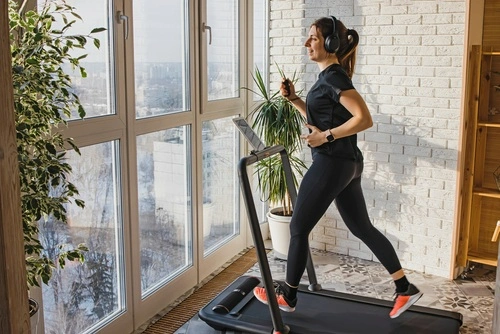
- Larger motors and stronger frames
- Adjustable inclines
- Handrails for balance
- Electronic consoles with workout modes
These machines are designed for all‑around workouts, including brisk walking, interval training, and running. They’re heavier and take up more space, but handle a wider range of intensities.
Why You Might Even Consider One (Science Speaks)
Let’s be honest: most of us should move more but can’t always step outside. There’s a real reason these machines are popular.
- Sitting all day harms your health. A study found that sitting more than eight hours daily increases the risk of negative health markers like elevated cholesterol and cardiovascular risk.
- Movement while working is possible. Using a walking pad lets you walk at a slow pace while typing or on calls — an easy way to increase daily activity with minimal disruption.
- Indoor exercise removes barriers. Bad weather, crowded gyms, limited time — a walking pad or treadmill means you don’t need extra context to move daily.
Head‑to‑Head: Walking Pads or Treadmills for Home Offices
Let’s break it down in terms that matter when you’re balancing space, budget, and goals.
Space and Setup
Walking Pad:
- Fits under most desks.
- Slim, unobtrusive, and easier to move.
- Great if you don’t want a “fitness room.”
Treadmill:
- Occupies a dedicated area.
- Even foldable models require more storage space.
- Less ideal for flexible multi‑use rooms.
Verdict: If your office space is tight and you want something almost invisible, walking pads win.
Workout Goals and Intensity
Walking Pad:
- Best for light activity and sneaking in steps.
- Good for weight management, low‑impact heart health improvement, and circulation.
Treadmill:
- Built for walking, brisk walking, jogging, and running.
- Offers cardio workouts at higher intensity.
- Incline options help build strength and endurance.
Verdict: Want a more serious workout — a treadmill takes the lead. Want to get more steps while working? Walking pad.
Comfort, Safety, and Features
Walking Pad:
- Lack of handrails means less support if balance is an issue.
- Simple controls, fewer distractions — a straight walk.
Treadmill:
- Handrails add safety and confidence, especially for older adults.
- Incline and cushioning improve comfort on joints.
Verdict: For safety and versatility, the treadmill is more robust. For straightforward walking under a desk, the pad does the job.
Cost and Value
Walking Pad:
- Usually more affordable (many under beginners’ budgets).
- Simple design = fewer parts that break.
- Good for basic movement goals.
Treadmill:
- Higher upfront cost and maintenance.
- More features but also more complexity.
Verdict: On a tight budget or just dipping your toes into fitness, a walking pad is a solid choice.

Real‑Life Examples: What People Actually Do
- A remote worker slides their walking pad under their standing desk and racks up an extra 5,000 steps a day while answering emails — without scheduling a workout break.
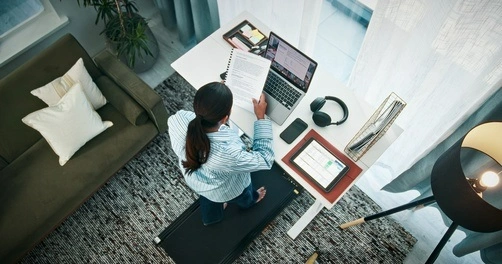
A woman walking on a Walking Pad while working on documents with a laptop on a standing desk above for finance in her home. - A runner who used to commute now uses a treadmill in the morning before work for serious cardio, and still takes calls from the living room on the walking pad in the afternoon.
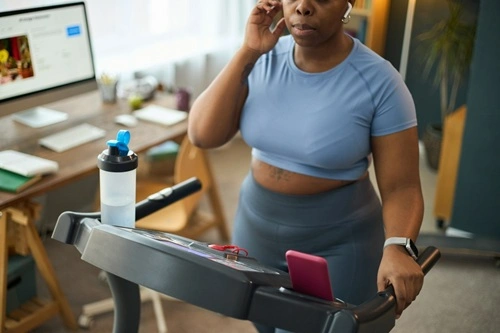
Woman jogging on a treadmill while engaging in a phone conversation, with a spacious home office setup in the background
These scenarios aren’t hypothetical — they reflect how users adapt these machines to work and life, not just workouts.
Practical Buying Guide: How to Choose
Here’s a step‑by‑step decision path:
- Define your space: Measure your office floor and desk clearance.
- Set your goals:
- Step count and light movement → walking pad
- High‑intensity workouts → treadmill
- Budget and future needs: Plan not just upfront cost, but replacement parts and space adjustments.
- Features that matter:
- Remote or app control
- Incline options (for treadmills)
- Max speed
- Noise level
- Try it out: If possible, test in person to check comfort and noise.
Common Mistakes People Make
- Buying the biggest or flashiest machine without thinking about whether it actually fits your space or daily routine.
- Overlooking speed or incline limits, then realizing it won’t support long-term workout goals.
- Underestimating how noisy it can be, which matters if you’re trying to walk during calls or focused work.
How to Use a Walking Pad or Treadmill Right in Your Home Office
Using a walking pad or treadmill effectively in a home office is about consistency and comfort, not speed or intensity. Here’s a practical approach:
- Position it smartly: Place the machine under a standing desk or right next to your workspace. Make sure your monitor and keyboard are at a comfortable height so you’re not leaning or straining while walking.
- Start slow and steady: For a walking pad, 1.5–2 mph is a good starting pace. If you’re on a treadmill, you can start slightly faster, but don’t push yourself—your goal is to move without interrupting work.
- Use intervals: Break your walking into 10–20 minute sessions throughout the day instead of trying to do one long stretch. For example, a quick walk in the morning, another before lunch, and one mid-afternoon can easily add 4,000–5,000 steps.
- Alternate with standing or short breaks: Don’t stay on the machine continuously. Stand, stretch, or take a short walk away from your desk between sessions to prevent fatigue and maintain focus.
- Focus on posture: Keep shoulders relaxed, avoid looking down at your feet, and engage your core lightly. This helps prevent strain and keeps the movement beneficial.
- Track progress: Even simple step counters or built-in treadmill apps help you see how much you’ve moved. Small, consistent gains matter more than intense workouts when your goal is staying active at work.
Small, consistent movement spread across the day often beats one long, rushed workout at the end. Over time, it improves circulation, reduces stiffness, and makes a noticeable difference in energy levels and focus.
DeerRun’s Walking Pads and Treadmills: A Closer Look
A subset of the walking pad market focuses on portability and convenience that especially suits home offices. One such option is the DeerRun Q1 Urban Plus Smart Walking Pad Treadmill — a compact treadmill designed to slip under a standing desk and let you walk while working. These models typically offer a remote control, LED data displays, and app connectivity, all while staying slim enough to store when not in use.
Another variant — the DeerRun Q2 Urban Plus Under‑Desk Walking Pad Treadmill — even adds a manual incline, so you can increase the intensity of your walking sessions without increasing speed.
From customer reviews, these devices succeed at being affordable and space‑efficient but don’t compare with higher‑end treadmills in terms of long‑term durability or advanced features. Some users report simple setup and good basic performance, while others caution that app integration and noise levels aren’t perfect.
Frequently Asked Questions
Q: Are walking pads safe to use while working?
A: Yes, if you keep the speed slow and focus on light walking. Avoid looking at your screen and stepping at the same time before you’re comfortable.
Q: Can walking pads replace outdoor walking?
A: They can add steps and reduce sedentary time, but getting outside has benefits like fresh air and varied terrain.
Q: Do treadmills require a dedicated space?
A: Most do, though some foldable models reduce footprint.
Wrap‑Up: Which Should You Choose?
Walking pads or treadmills both get you more movement at home — big gains over sitting still all day. If you want light movement that fits into work, a walking pad makes it easy, saves space, and won’t break the bank. If exercise intensity, versatility, and structured workouts matter, treadmills deliver more capacity and performance.
The choice comes down to space, goals, and how you actually move through your day — no one “best” answer fits everyone.
Take it from users who’ve tried both: movement that fits your life is better than movement that waits for someday.